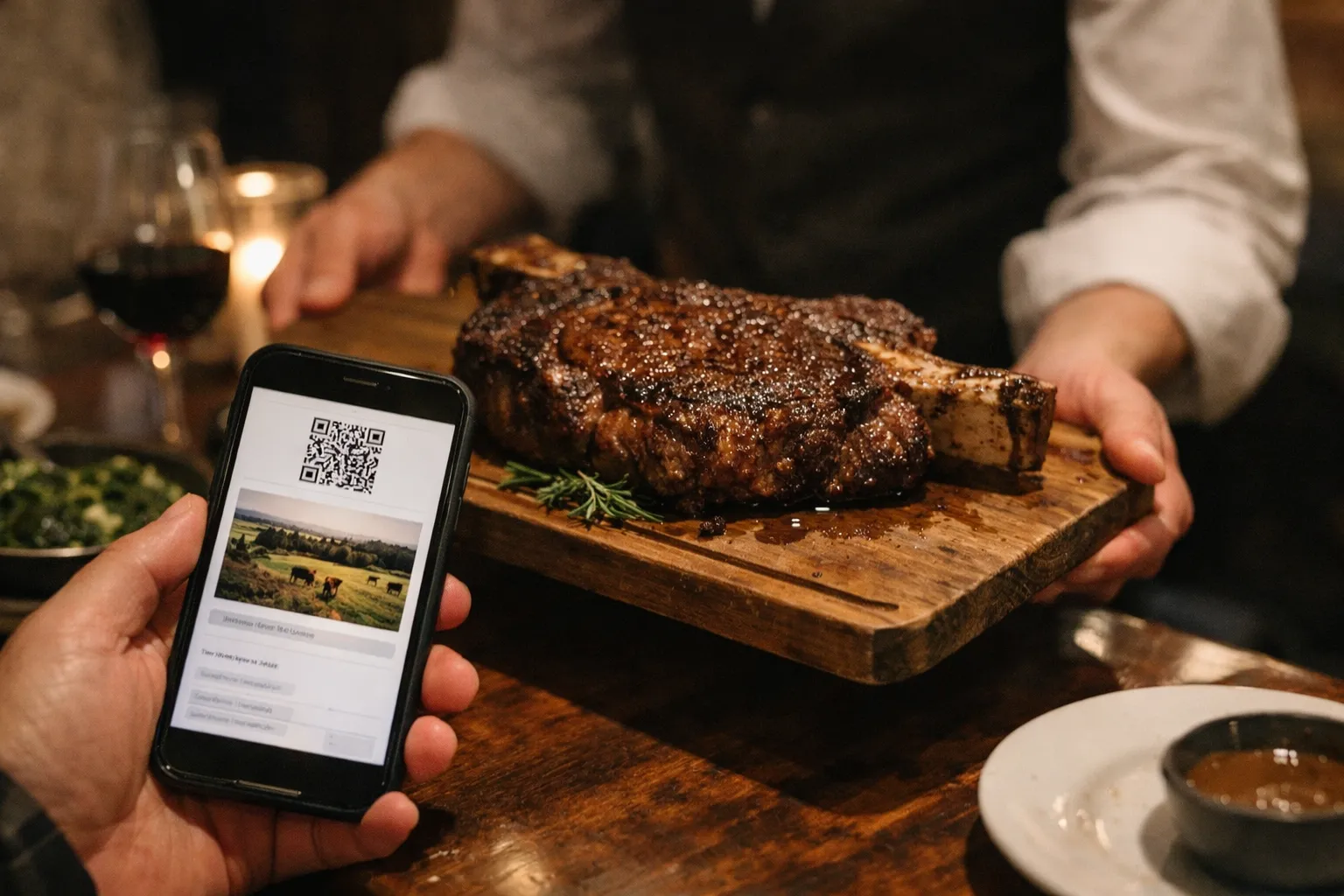
Who, what, when, where, why: As of July 2026, U.S. steakhouses and independent butchers across major markets are expanding use of QR-linked traceability to show beef provenance to diners and buyers. Restaurants, retailers and supply‑chain software firms are layering QR pages with standardized identifiers (GS1 Digital Link), optional NFC tags and richer media so customers at the table or countertop can see farm-of-origin, harvest and processing data, certifications and handling milestones. The shift responds to sustained consumer demand for verifiable sourcing, lower costs for tagging and hosting, and stronger industry focus on interoperable standards.
Why provenance has moved from label to smartphone — and what changed since 2024
The original drivers remain: inconsistent definitions for terms like “grass-fed,” fragmented supply chains, and occasional mislabeling cases that undermined trust. Since 2024 the change that matters is standardization and technical integration. Two developments are most consequential:
- Standards adoption: The GS1 Digital Link—an existing global effort to encode product, lot and batch identifiers in web-resolvable links—has seen wider uptake among traceability vendors and retail partners, making QR pages easier to integrate with existing barcodes and inventory systems.
- Richer device options: NFC tags have become inexpensive enough that many premium-but-small-batch producers use both QR and tap-to-read NFC on boxed cuts or display cards, improving the guest experience for people who don’t want to open their phone camera app.
At the platform level, established players such as IBM Food Trust and smaller traceability SaaS providers continue offering batch-level records, while newer services emphasize plug-and-play POS and kitchen-label workflows to reduce staff friction. Integration with reservation systems and contactless menus—now routine at many mid-market restaurants—means provenance links are increasingly visible before the table order is placed.
How operators are implementing QR-based provenance in 2026
Implementation still varies by operator size and business model, but five practical patterns have emerged this year:
- Batch pages for signature cuts: Many steakhouses start by attaching a QR/NFC to a menu item or display card for one high-margin cut and expand after staff training.
- GS1 Digital Link integration: Operators working with larger distributors or retail partners are using GS1 keys to ensure QR pages map cleanly to UPCs and lot data in warehouse systems.
- Hybrid tech stacks: Independent butchers commonly use a combination of a SaaS traceability provider for data hosting and a lightweight label printer that generates serialized QR codes on demand.
- Certification-first pages: Many operators highlight third-party audit reports (e.g., organic certificates or animal-welfare audits) with downloadable PDFs and links to verifier registries.
- Consumer engagement features: Provenance pages increasingly include chef tasting notes, cooking suggestions, and short farm videos—intended to convert transparency into perceived value and upsells.
Real-world examples
Independent butchers in Seattle and Portland now commonly attach QR tags to dry‑aged steaks on display; regional steakhouse groups in the Northeast feature provenance links on table tents for premium cuts. Several boutique ranch-to-restaurant programs are using serialized QR codes tied to single-animal harvests to support premium pricing for whole-animal dishes.
Benefits: what’s shifted for diners and operators
- Stronger storytelling that converts: Front-of-house staff report that diners who scan provenance pages engage longer and are more likely to add a side, bottle or premium cut—turning transparency into measurable revenue.
- Faster incident response: Even partial digital chains let operators isolate affected lots more quickly in a quality or safety event, reducing waste and expense.
- New merchandising channels: Butchers who publish batch pages find they can sell higher-value product through e-commerce storefronts with the same provenance content used in-store.
Remaining challenges and limitations in mid-2026
Momentum has not solved every friction point. Key limitations today include:
- Data gaps upstream: Small ranchers still sometimes lack consistent digital records or choose not to share identifying lot data, leaving QR pages with shallow detail.
- Variable depth and verification: QR pages vary in quality—some show complete chain-of-custody records; others offer only farm names and a few photos. Consumers must learn to read the page critically (who issued the data? is there a serial number?).
- Cost and workflow: While basic QR pages are affordable, true serialization, NFC tags and integrated ERP/POS workflows require one-time setup and modest recurring platform fees that can challenge thin-margin operations.
Impact: who benefits and what to watch for
Premium operators, diners who prioritize origin and smaller producers that can command direct-to-consumer prices benefit most. For mainstream diners, provenance is becoming a point of comparison for higher-end menus rather than a daily purchase-driver.
Watch for three developments over the next 12–24 months: greater interoperability driven by GS1 adoption, broader use of NFC for convenience, and more third-party verification (audits and lab results) linked directly on QR pages so consumers can evaluate claims themselves.
Reactions from industry participants
Traceability software vendors emphasize interoperability and easy onboarding for small operators. GS1 US has continued to advocate for Digital Link use across fresh foods to reduce mislabeling and improve recall speed. Independent restaurateurs and butchers uniformly cite customer engagement and differentiation as primary benefits, while a minority flag the operational burden of maintaining batch-level records.
Practical takeaways for buyers and home cooks — July 2026
- If provenance matters, ask to see the QR or tap the NFC. A useful provenance page includes farm name, harvest date, processor lot, and any third‑party certification documents.
- Prefer QR pages that use GS1 identifiers or list a lot/serial number you can ask the supplier to verify—those pages are more likely to map back to supply-chain records.
- For home cooks buying online, request batch-level photos and aging details; these materially affect cook times and outcome for dry-aged cuts.
- If you’re a small operator considering traceability, start with one signature SKU, pick a provider that supports GS1 Digital Link, and budget for labeling hardware plus a short staff-training sprint.
How durable is the value?
Provenance won’t replace taste, but when done transparently it strengthens trust and lets operators justify price premiums while improving recall and quality-response times.
FAQs
Are QR provenance pages legally binding proof of sourcing?
No. A QR page is evidence of a recorded data trail but does not automatically equal legal proof. For formal claims (organic, USDA-verified labels), look for scanned certificates or links to verifier registries and ask for batch or lot numbers you can cross-check with the certifier.
Can small ranchers participate without expensive tech?
Yes. Many traceability platforms offer simple web forms and barcode/QR generation so a rancher can provide batch info via phone or email. Local cooperatives and third-party aggregators can also digitize records on behalf of small producers.
Is NFC better than QR for restaurant use?
NFC offers a one‑tap convenience for diners and can feel more polished, but QR codes remain universally accessible and cheaper to print. Many operators use both: printed QR for visibility and NFC for a premium touch.
How can I tell if a provenance page is trustworthy?
Look for specific, verifiable details: lot or serial numbers, harvest/pack dates, processor name, and links to third‑party certifications or lab reports. Pages that only show stock photos and vague narratives should be treated cautiously.
What should restaurants budget for starting QR traceability?
Costs vary. Expect one‑time setup (label printer or NFC tags, staff training) and a monthly SaaS fee for hosting and data services. Starting with a single SKU minimizes upfront expense and helps refine workflows before scaling.