Introduction
This updated June 2026 guide shows car‑buying enthusiasts how to evaluate advanced driver‑assistance systems (ADAS) on used cars and why ADAS demands different inspection, documentation and negotiation tactics than traditional mechanical systems. You’ll get a step‑by‑step lot checklist, road‑test procedures, when to hire a specialist, current mid‑2026 cost ranges for recalibration and repair, and new items to watch for this year — notably over‑the‑air (OTA) software updates and subscription‑gated features.
Who this is for: buyers shopping for late‑model used cars (2018–2026) that advertise features such as adaptive cruise, lane keeping, automatic emergency braking (AEB), blind‑spot monitoring and hands‑free driving. Why this matters: ADAS components are increasingly mission‑critical but often produce invisible faults; identifying problems before purchase reduces safety risk and unexpected costs.
Prerequisites / Context
Before you go to a lot or meet a private seller, make sure you have:
- The vehicle VIN and advertised trim level so you can confirm factory‑installed ADAS features.
- A recent vehicle history report (CARFAX, AutoCheck) and the ability to search manufacturer recall databases with the VIN.
- A phone or camera to document visible repairs, and a second person for safety checks during road tests.
Important 2026 context:
- OTA software updates are now routine for many brands (Tesla, GM, Hyundai/Kia, BMW, Mercedes and others). That means some ADAS bugs can be fixed without shop visits — but it also means a vehicle’s ADAS behavior can change between inspections.
- Subscription activation of advanced ADAS features has become common; some hands‑free or enhanced lane‑centering functions may be disabled unless a paid plan is activated or transferred to a new owner.
- NHTSA, IIHS and industry groups continue to emphasize driver monitoring systems and clear consumer disclosure. Expect increased dealer willingness to provide digital calibration records on request.
Step 1 — Before you visit: research and red flags
Do this desk work first so you know what to expect and what to flag.
- Confirm the ADAS package for the exact year/trim using the manufacturer build sheet or Monroney sticker. Some features that appear standard on higher trims are optional on lower ones.
- Pull a vehicle history report and search for collision claims, glass/windshield replacements, and insurance totals. Front‑end or A‑pillar claims are the biggest ADAS red flags.
- Search the NHTSA recall database for the VIN and read manufacturer service bulletins (TSBs) — these can reveal known sensor issues or required software updates.
- Check forums and owner groups for model‑year issues (e.g., persistent camera or radar false‑positive reports). Use these as context, not definitive proof.
- Ask the seller whether any ADAS features require subscription activation and whether the subscription transfers with sale — get that in writing if it’s material to your purchase decision.
Step 2 — On the lot: structured ADAS inspection checklist
Bring a phone, flashlight and a helper. Photograph key areas and save timestamps (useful evidence if you need to negotiate or reject the sale).
Exterior and visible components
- Windshield and camera area: inspect the glass directly behind the rearview mirror for chips, cloudy repairs, or mismatched seals. Camera‑based ADAS mount here; any replacement without a calibration receipt is a red flag.
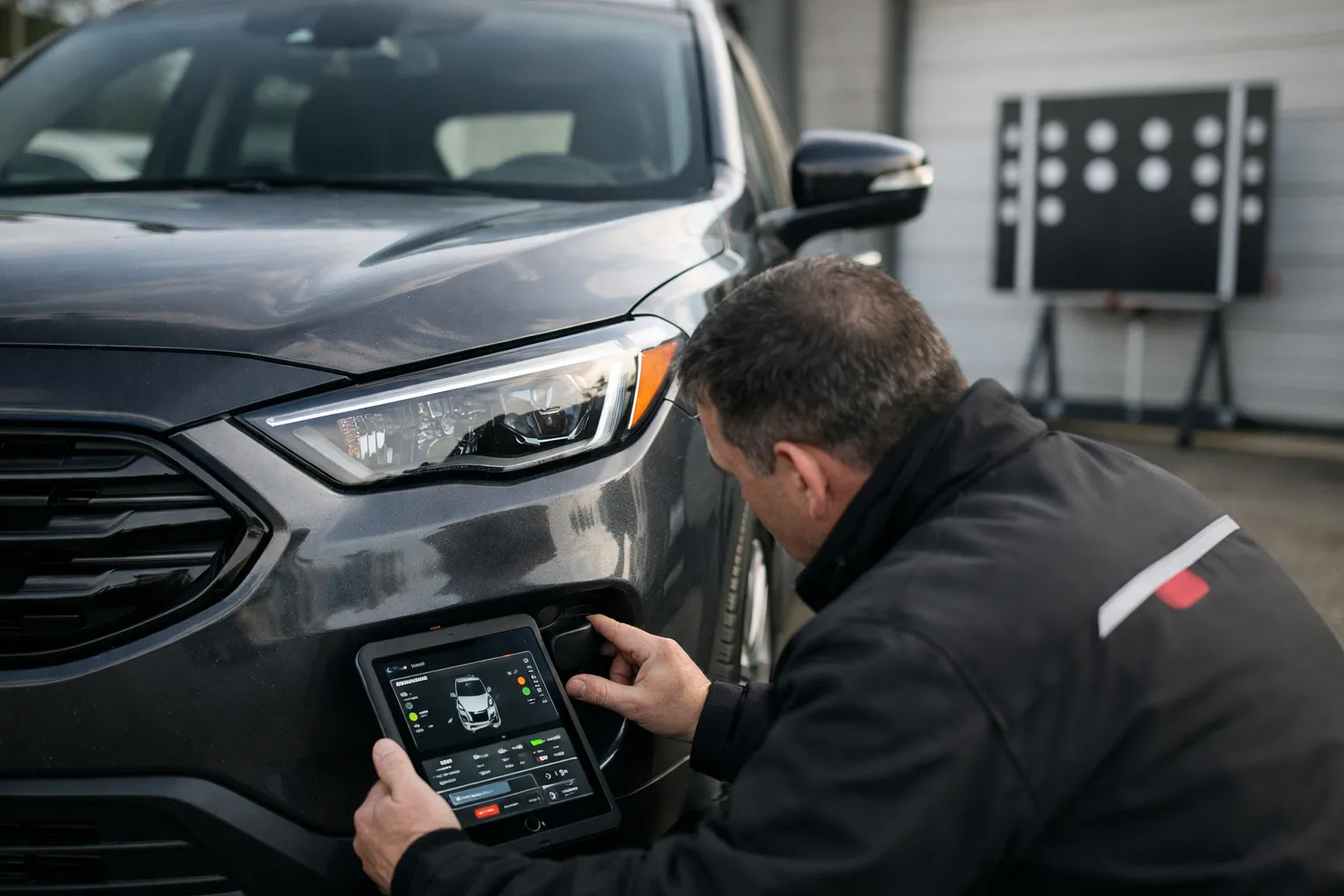
- Front bumper/grille: look for paint mismatches, uneven gaps, new bolts or missing plastic clips. Radar modules are often behind the bumper; signs of removal suggest prior impact.
- Sensor housings and lenses: check side mirrors for blind‑spot sensors, rear bumpers for parking sensors, and the lower front fascia for ultrasonic sensors. Scratches or misaligned housings can degrade performance.
- Wiring/connectors: peek beneath bumper covers where visible — aftermarket splices or non‑OEM fasteners are cause for further inspection.
Interior, displays and diagnostics
- Startup checks: power on and watch for ADAS warning lights (AEB, lane assist, forward collision). A static lamp that does not clear after startup suggests an unresolved fault.
- Settings and software info: open ADAS menus, note whether features are toggled on, and capture any software version or last‑update date shown. If the system shows an OTA update date, ask whether updates auto‑apply.
- Driver monitoring: for cars with hands‑free driving, confirm the interior camera or steering‑torque sensor is present and that the car asks for driver attention during operation.
- Subscription flags: verify with the seller whether any features are disabled behind a paid plan (ask to see the active account status on the vehicle before you buy).
Step 3 — Road test: safe, focused ADAS function checks
Run these tests in low‑risk conditions. Know the system’s activation thresholds (owner’s manual).
- Adaptive Cruise Control (ACC): on a quiet highway, engage ACC and verify it holds speed, maintains a selectable following gap, and responds to a slower lead vehicle by reducing speed smoothly.
- Lane‑Keeping Assist / Lane Departure Warning: drive on a straight, well‑marked road at the system’s minimum operational speed and observe lane‑centering behavior and any audible or steering prompts when gently drifting.
- Blind‑Spot and cross‑traffic alerts: with a helper in an adjacent lane or walking behind at a safe distance, confirm visual and audible alerts function while changing lanes or reversing.
- AEB (automatic emergency braking): avoid risky maneuvers. Look for approximate behavior during normal deceleration events and ask the seller for any logged AEB events or a diagnostic readout from a shop if possible.
- Parking assist and sensors: approach low obstacles slowly and note distances indicated and chime timing.
Why these tests matter: ADAS performance can degrade without visible damage; behavior during use is a primary indicator of calibration, sensor cleanliness and software integrity.
Step 4 — When to require an ADAS specialist inspection
Order a professional ADAS inspection (and get the report in writing) if you see any of the following:
- Persistent ADAS warning lights or inconsistencies in system behavior.
- Collision history involving the front, windshield, A‑pillar or front quarter panels — even if cosmetically repaired.
- Recent windshield or bumper replacement with no documented calibration.
- Aftermarket bumpers, windshields or sensor housings that alter sensor geometry.
- Subscription or software anomalies — e.g., features shown as “disabled” pending activation.
Specialist shops use target boards, OEM alignment tooling and dealer‑level scanners (brands commonly used in 2026 include Autel, Hunter, Bosch and OEM factory tools). A full inspection will state whether static calibration is sufficient, if dynamic road calibration is required, or if sensor replacement/programming is necessary.
Step 5 — Current mid‑2026 calibration and repair cost guide
Costs still vary by region, vehicle and shop type. Updated mid‑2026 typical ranges (U.S. market):
- Windshield camera recalibration (static): $175–$450
- Radar recalibration (static or dynamic): $250–$900
- Full multi‑sensor recalibration (dynamic testing; dealer level): $450–$1,400+
- Sensor replacement (camera/radar): $350–$1,800+ per sensor depending on OEM part, programming and keypad licensing requirements
Notes and new considerations for 2026:
- OTA software fixes can sometimes resolve software bugs without calibration costs, but physical misalignment still requires shop service.
- Dealers remain pricier for OEM software and firmware updates; independents with OEM‑grade calibration equipment are a common cost‑effective alternative — ask which tools and software versions they use.
- Subscription reactivation or OEM licensing fees for certain advanced features may be required and are separate from physical repair — clarify transferability and cost before buying.
Documentation to demand from the seller or dealer
Before completing a purchase, require the following in writing or as digital records:
- Receipts for any windshield, bumper or sensor repairs and explicit recalibration invoices (include date, VIN, shop name, equipment used and whether static or dynamic calibration performed).
- A disclosure of any ADAS warning lights or unresolved diagnostic trouble codes.
- Proof of recent OTA software updates and the date of the last ADAS‑related firmware change.
- If applicable, verification that subscription‑gated ADAS features are active and transferable, or the seller’s written confirmation they will cover transfer/activation costs.
- A short road‑test verification signed by the inspector or technician listing which ADAS functions passed basic checks.
Negotiation tactics based on ADAS findings
Use documented ADAS issues to adjust price or require remediation. Practical approaches:
- If recalibration is needed and the seller won’t pay, reduce your offer by a conservative estimate of recalibration plus a margin (mid‑2026 example: $500–$950), or get the seller to leave the car on a written agreement to repair prior to title transfer.
- For missing calibration receipts after visible repairs (new windshield, bumper), treat the vehicle as if calibration is required and negotiate accordingly.
- If sensor replacement is required or persistent faults are present, obtain a written shop estimate and demand either a price reduction equal to the estimate or completion of repairs by a certified shop before purchase.
- For subscription‑locked features, factor the subscription cost and transferability into your valuation — demand the seller confirm feature activation at handover or deduct the present value of the lost feature from your offer.
Insurance, warranty and resale considerations — 2026 updates
Tell your insurer about significant ADAS component replacements; some carriers request disclosure of prior crash repairs. Certified pre‑owned (CPO) programs increasingly include ADAS coverage or verification, but read exclusions: many warranties exclude damage from aftermarket parts or improper installations. For resale, keep calibration invoices and OTA update logs — prospective buyers increasingly expect this documentation.
Common mistakes to avoid
- Assuming a clear dash means ADAS is healthy — scars in sensor housings or missing calibration receipts still matter.
- Buying a car on the premise that “software fixes later” will solve physical misalignment problems.
- Failing to confirm whether advanced ADAS features are tied to a subscription or a transferable account.
- Skipping a specialist inspection when the vehicle shows prior front‑end repairs or persistent warning lights.
Pro tips
- Ask for a screenshot of the vehicle’s ADAS software/firmware version and last update date; note it in your purchase paperwork.
- If a dealer offers to include calibration as part of the sale, have it written into the contract with a specific shop name, procedure (static/dynamic) and VIN‑linked invoice to follow.
- Keep a digital folder with VIN‑linked documents (history report, calibration receipts, OTA logs) — this raises resale value and buyer confidence later.
- When possible, choose independent shops certified on the specific OEM tooling used — they often provide the same results at lower cost and will issue a calibration report you can rely on.
Tools and resources (updated June 2026)
- NHTSA recall lookup (nhtsa.gov) — VIN search for safety recalls
- Manufacturer owner portals — many now show recent OTA and recall history for a VIN
- Vehicle history reports — CARFAX, AutoCheck (look for collision and glass claims)
- Local ADAS calibration shops — request the exact scanner/tool brand (Autel, Hunter, Bosch, OEM) and a sample calibration report
Final pre‑purchase quick checklist
- Confirm advertised ADAS features match VIN and trim.
- Inspect windshield, bumpers and sensor housings for recent repairs.
- Power on and note ADAS warnings, software/OTA info and subscription status.
- Perform controlled ADAS function tests on the road with a helper.
- Request and review calibration and repair receipts; if in doubt, order a professional ADAS inspection.
Bottom line
By June 2026, ADAS is a standard and evolving part of the used‑car market. Software (OTA) and subscription business models add new layers to the inspection and negotiation process, but the fundamentals remain: verify function, verify service history, and don’t accept uncertainty. Documentation — calibrated receipts, OTA logs and written confirmations of subscription transfer — is now as valuable as the mechanical inspection. With methodical checks and the willingness to use ADAS specialists when needed, you can buy a safer used car without unpleasant surprises.
FAQ
How can I tell if an ADAS feature is blocked by a subscription?
Look in the vehicle’s ADAS or infotainment menu for messages such as “activation required,” “trial expired,” or “feature unavailable.” Ask the seller to demonstrate the feature working with the vehicle in its current state. Require written confirmation of transferability or seller payment of any activation fees before sale.
Can an OTA software update fix calibration problems?
OTA updates can address software bugs, false‑positive detections or improve sensor algorithms, but they cannot correct physical misalignment of sensors or improperly installed parts. If the issue is calibration or damage, a shop visit will still be required.
Is a dealer calibration always better than an independent shop?
Not always. Dealers often have direct OEM software and proprietary tools for complex programming but charge more. Many independent shops now use OEM‑grade tools (Autel, Hunter, Bosch) and trained technicians and can provide equivalent calibration at lower cost. Ask which tools and software versions the shop uses and request a written calibration report.
What documentation should I insist on if the windshield was replaced?
Get the windshield invoice showing OEM or OEM‑equivalent glass (note manufacturer part number), the installing shop’s name, and a calibration receipt that lists the VIN, the calibration method (static or dynamic) and the equipment used. If the seller can’t produce this, include a calibration cost in your negotiation.
How much price reduction should I request for an unresolved ADAS warning light?
Obtain a written diagnostic estimate from a qualified shop. For simple recalibrations, mid‑2026 conservative offsets are roughly $500–$950. For likely sensor replacement or repeated faults, use the shop’s written estimate (which may range into the low thousands) as your negotiation basis.