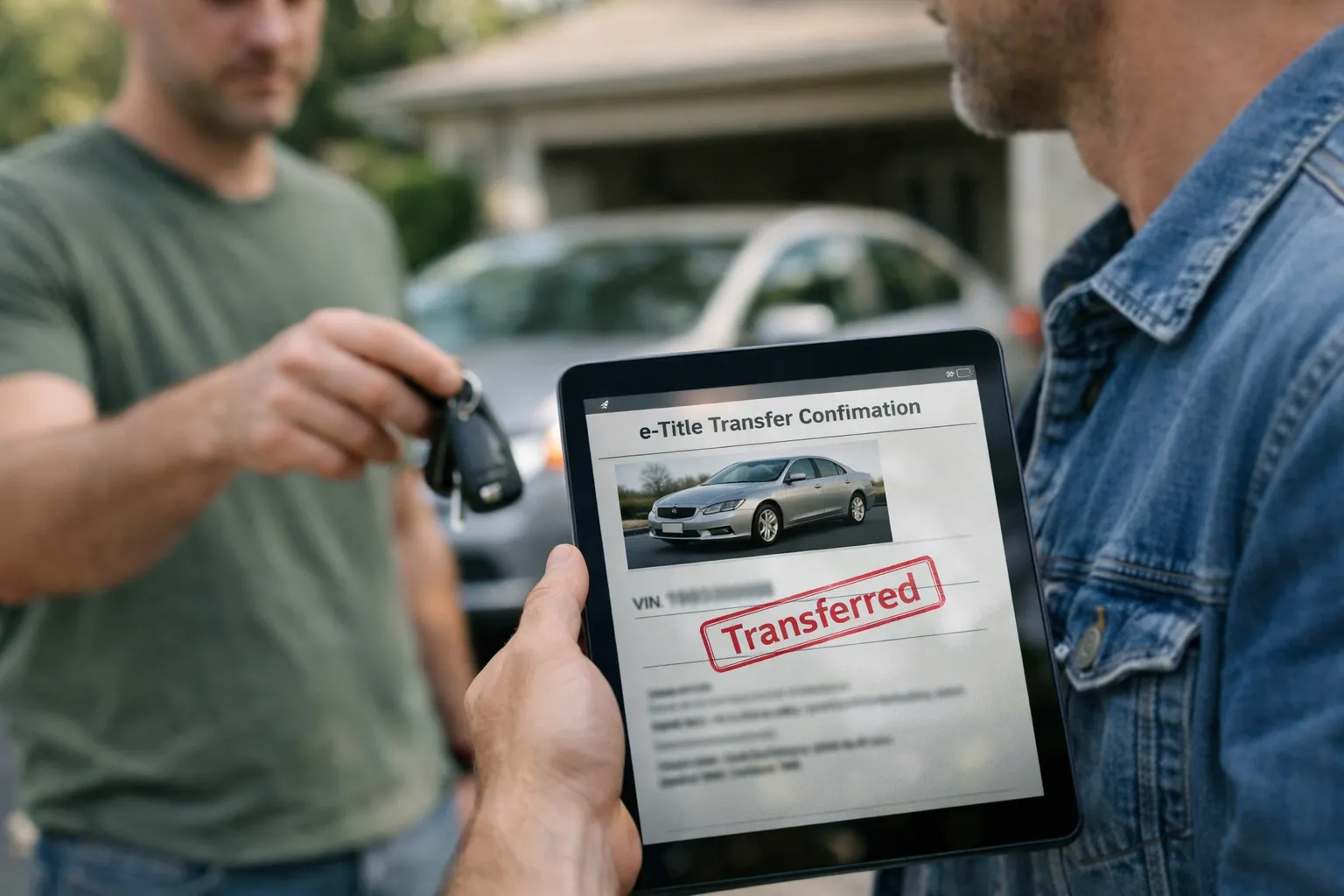
Who, what, when, where and why: As of June 2026, the interstate electronic vehicle title (e‑title) network — the connected infrastructure that lets participating state motor vehicle agencies, lenders and marketplaces exchange digital vehicle titles and lien information — has moved well past its March 2026 production launch and into broader adoption across U.S. jurisdictions. The change affects private‑party buyers, online shoppers and dealers in participating states by shortening closing times, reducing paper handling and shifting many title‑related steps into integrated online workflows.
Why this matters now
Paper titles have long been a pain point in U.S. vehicle transactions: mailed certificates, manual lien satisfactions and mismatched state rules slowed closings and created fraud opportunities. The e‑title network is intended to standardize and automate those steps. Since the initial production rollout in March 2026, state DMVs, national lenders and several large online marketplaces have accelerated integrations. For buyers this means transactions that once took days or weeks are now often completed in hours — but only when both states, the lender (if any) and the service provider are connected.
What’s changed since March 2026
- Broader state adoption: Through June 2026 the network’s participant list has grown from the handful of early adopters to multiple large‑population states and several smaller jurisdictions. That expansion has increased the odds that a private sale between two residents can be completed entirely electronically.
- Major lender participation: Several national auto lenders and the largest indirect finance platforms have completed integrations that allow electronic lien recording and release. That reduces the common stall where a lender’s manual lien release delays title issuance.
- Marketplace and dealer integrations: National retailers and marketplaces have published APIs and consumer flows that support one‑click title transfers in participating states; at least three major online sellers announced live e‑title workflows in the spring of 2026.
- Early reports on speed and accuracy: State DMVs and industry groups report median transfer times in connected transactions dropping from multiple business days to same‑day or next‑business‑day resolution when no out‑of‑network participant is involved.
Specific coverage and limits
Participation remains optional for states and for lienholders. Important practical limits persist:
- Cross‑jurisdiction checks still necessary: Even with rapid adoption, buyers must confirm both the seller’s and buyer’s states are active on the network and that the transaction type (private sale, dealer sale, salvage, export) is supported.
- Not all lenders are integrated: Many large banks and captive finance arms are live, but community banks, small credit unions and private sellers’ informal lenders may lag — a common reason for an otherwise digital sale to revert to paper.
- Transaction exclusions remain: Salvage branding, certain court‑ordered transfers, and some out‑of‑country transactions generally require paper processing under state law.
Updated buyer benefits — and new risks
Benefits that are material for buyers in June 2026:
- Much faster closings: When all parties are on the network, transfers and lien releases commonly finalize the same business day.
- Improved title visibility: Real‑time title status checks reduce (but do not eliminate) the risk of an undisclosed lien or an unexpected salvage brand appearing after purchase.
- Smoother remote purchases: Escrow services and marketplaces that integrate the e‑title APIs can coordinate funds release only after the digital transfer completes.
New or evolving risks buyers should understand:
- Phishing and impersonation: Fraudsters have begun mimicking official e‑title portals and email notices. Always confirm you are on your state DMV domain or a verified marketplace integration.
- Fee fragmentation: Several states and third‑party providers have introduced electronic processing fees (commonly $5–$20 for private transfers, depending on the state and service layer). Ask in advance who pays these fees.
- Operational edge cases: Partial integrations — where a lender can record liens electronically but not release them instantly — still create holdbacks and temporary registration issues.
Practical checklist for buyers — June 2026 edition
Before you sign or wire money, follow these updated, practical steps:
- Confirm state and lender participation. Check both the seller’s and buyer’s state DMV site and ask the seller for the transaction flow they plan to use. If the vehicle has a loan, ask the lender for an electronic‑lien confirmation number or integration statement.
- Use only official portals or verified integrations. Verify URLs (state DMV domains end in .gov), look for OAuth or bank‑grade identity verification screens, and avoid communication that requests you to move outside the platform for payment or credential entry.
- Request transaction receipt and VIN‑level proof. Insist on an e‑title transaction ID, a digital title certificate screenshot or PDF showing the VIN and new owner, and any electronic lien release documents before releasing funds.
- Prefer escrow for high‑value private sales. Escrow services that integrate with e‑title systems can hold funds until the title and registration change are confirmed in the network.
- Budget for new fees and timelines. Ask in advance whether your state charges an e‑title fee, whether the marketplace levies a processing fee, and whether temporary registration or plate pickup is required in person.
- Keep paper backups when required. For transactions that fall into excluded categories, retain notarized bills of sale, temporary registration forms, and paper lien releases until your state issues the definitive title.
Reactions from stakeholders
State motor vehicle agencies have generally praised the operational efficiencies while cautioning consumers to verify participation. Industry trade groups point to faster turnarounds and lower processing costs. Consumer advocates welcome better visibility but emphasize the need for robust identity checks and clear, upfront disclosures about fees and exceptions.
"The e‑title network is changing how titles move across state lines, but consumers must still do the basics: confirm participation, verify lenders and demand clear receipts," said an official statement from the coordinating industry association in early June 2026.
Impact — who gains and who should be cautious
Private buyers and remote purchasers stand to gain the most: fewer DMV visits, faster registration and lower closing uncertainty when every participant is on the network. Sellers benefit from faster release of funds. Smaller lenders, certain county DMVs and markets with many salvage or out‑of‑state transfers remain areas where paper workflows will persist and buyers should be especially cautious.
What to watch next (and when)
- Summer–fall 2026: Expect additional states and dozens more lenders to announce integrations. Watch your state DMV’s e‑title page for exact dates.
- Marketplace rollouts: Several national platforms plan staged rollouts for private‑party sellers; check platform help pages for live state lists.
- Regulatory review: Consumer protection and privacy audits are expected in late 2026; those reviews may prompt standardized fee disclosures and mandatory identity‑verification standards.
What should you do today?
If you're buying a car now, treat e‑title as an operational improvement that requires the same buyer diligence as paper titles: confirm participation, verify the lender and the portal, insist on electronic receipts tied to the VIN, and use escrow for high‑value or remote deals.
Frequently asked questions
How do I know if my state is on the interstate e‑title network?
Check your state DMV website for an "e‑title" or "electronic titling" page and look for an interoperability or network participant list. The coordinating association for state motor vehicle administrators also maintains a public tracker you can consult for cross‑jurisdiction status.
What if the car has a loan and the lender isn’t integrated?
If the lender has not integrated, the sale will typically require a traditional paper lien release. Confirm with the lender how the payoff and release will be delivered — electronic release, mailed release, or pickup at a branch — and plan for potential delays before funds are released.
Are e‑title transactions more secure against fraud?
E‑title workflows reduce certain fraud vectors (such as forged paper titles) by enabling real‑time checks and lender confirmations, but they introduce online risks like phishing and account takeover. Always use official DMV pages, verify domain names, and require transaction IDs and digital receipts before completing payment.
Can I still get a paper title if I want one?
Most states that issue e‑titles still allow consumers to request a paper certificate, though some charge a fee. If you prefer a paper title for your records, ask your state DMV about the process and any associated cost.