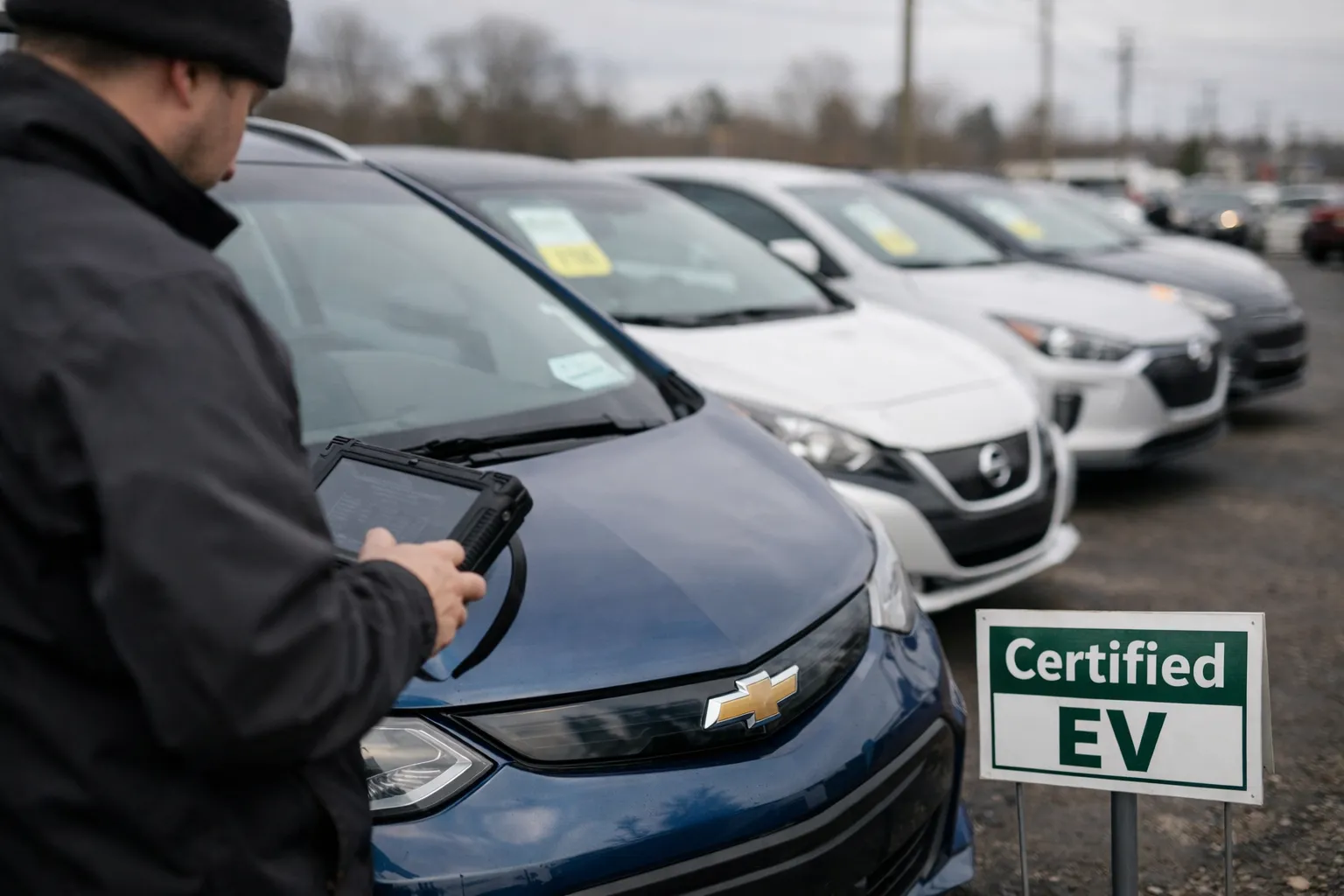
Who, what, when, where, why: By June 2026, U.S. and European used‑vehicle markets are receiving a second, larger wave of off‑lease electric vehicles (EVs)—chiefly 2019–2022 leases returning at the end of 36–48 month terms. The influx, visible at dealer lots, online marketplaces and auction houses from Phoenix to Rotterdam, is expanding inventory, softening retail asking prices and forcing dealers, lenders and OEMs to respond to battery‑condition concerns.
Context: why the timing matters
The return of these units is calendar‑driven: a large cohort of early mass‑market EV leases—Tesla Model 3/Model Y, Chevrolet Bolt EV/Bolt EUV, Nissan Leaf, Hyundai Kona Electric and early Kia Niro EVs—began reaching lease term end in late 2024 and accelerated through 2025–2026. OEM volume models and short‑term luxury leases (early Mustang Mach‑E, Volkswagen ID.4, Audi e‑tron examples) add mid‑mileage and high‑mileage vehicles to the used pool.
This cohort differs from earlier waves because it includes a higher share of vehicles that spent warranty years under heavy DC fast‑charging and rideshare use, and because more robust CPO and third‑party certification programs have emerged—so buyers face a wider spectrum of quality and risk.
Updated market picture — supply, prices and financing (June 2026)
- Supply spike persists. Industry trackers and auction data show off‑lease EV inflows remaining elevated in Q1–Q2 2026 compared with 2023 levels. Large remarketing channels—Manheim, ADESA and online retailers like Carvana and Vroom—report higher EV lane volumes and longer days‑to‑turn in some segments.
- Price correction continues. Aggregated marketplace indexes and dealer price lists indicate that average used‑EV asking prices have softened by roughly 20–30% from 2022 peaks for many mainstream models; premium and brand‑favored models (early Tesla variants, newer Hyundai/Kia EVs) have held value better. Expect model‑by‑model variation: popular, reliable models with strong service networks depreciate slower.
- Financing and residuals. Captive finance arms and banks have continued to tighten credit on some older EV listings—shorter loan terms, slightly higher interest rates and higher down‑payment expectations—while offering competitive terms on CPO units with verified battery health.
New developments since March 2026
- OEM battery refurbishment programs. Several manufacturers and franchise dealer groups announced expanded battery‑remanufacturing and module‑replacement options in early 2026, lowering out‑of‑warranty repair costs for many 2019–2022 models. That has improved resale prospects for vehicles with localized module degradation.
- Wider adoption of telematics for SoH reporting. More dealers now use original telematics (Tesla, GM OnStar, Hyundai/Kia telematics) or third‑party device logs to provide recent charge cycles and state‑of‑health (SoH) snapshots at sale. This has become a key differentiator on listing pages and auction condition reports.
- Regulatory and tax context. The federal used‑clean‑vehicle tax credit (available under the Inflation Reduction Act rules) continues to affect demand for eligible low‑price used EVs, but qualification rules—price caps, mileage limits and income restrictions—remain a gating factor for many buyers.
What matters most for buyers now — updated priorities
Battery condition remains the single most important factor. With more units on the market, buyers benefit from choice—but must do more homework to separate solid buys from trouble spots.
- Obtain a recent battery SoH or capacity report. Ask for the latest log showing maximum charge capacity, time‑stamped charge cycles and any recorded thermal events. Sellers increasingly post battery metrics on listings; insist on them before a test drive.
- Confirm warranty transfer rules and remaining coverage. Most OEMs still back battery capacity for 8 years/100,000 miles (terms vary). Determine whether the original battery warranty is transferable and what percentage‑of‑capacity guarantee remains.
- Assess charging and usage history. Request charging logs or telematics data where available. Cars with frequent DC fast‑charging (or high daily mileage/ride‑hail history) will typically show faster degradation.
- Prefer CPO or dealer‑backed battery guarantees when possible. Certified pre‑owned EVs that include battery health certification or short‑term battery warranties reduce risk and often attract more favorable financing.
- Factor in repair pathways. Check availability and cost of remanufactured packs or module repairs in your region; these options have become more common and less costly in 2026.
Impact: who wins, who loses
Price‑sensitive buyers and fleet buyers stand to gain from greater selection and lower entry prices. Conversely, sellers of early EVs without documented battery health face longer listing times and price concessions. Independent buyers lacking access to telematics or certified inspections take on more risk unless they secure extended battery coverage.
Industry reactions and marketplace shifts
Used‑car retailers such as CarMax and Carvana have expanded EV grading tools and now routinely include battery capacity or telematics summaries on high‑inventory listings. Auction houses (Manheim, ADESA) have formalized EV condition categories and created separate EV lanes to improve price discovery. Dealers report offering short‑term battery guarantees and collaboration with OEM remanufacturing partners to make pricing more palatable.
What's next — watch for these signals
- Stabilization of off‑lease volumes by late 2026 as the 2019–2022 cohort clears the market and the next wave (2022–2024 leases) begins to roll off in 2027.
- Greater transparency requirements or standardized SoH reporting across marketplaces, which would materially reduce information asymmetry and compress premiums for certified units.
- Further declines in battery repair costs as remanufacturing scales could lift values for vehicles with partial degradation.
Checklist for used‑EV shoppers — June 2026
- Demand a recent battery SoH/capacity report and charging history where possible.
- Confirm remaining OEM battery warranty and transferability rules in writing.
- Prefer CPO units or dealer listings that include a battery guarantee.
- Get a pre‑purchase inspection with a focus on battery modules, thermal management, and high‑voltage wiring.
- Compare total cost of ownership including potential battery module repairs and insurance premiums.
Frequently asked questions
Are off‑lease EVs cheaper because batteries are failing?
Not necessarily. Prices are lower overall because supply has increased, but degradation varies widely by model, climate, and usage. Many returned leases show healthy batteries; others with heavy DC fast‑charging or ride‑hail use show faster wear. Verify with a SoH report and consider CPO or dealer guarantees to mitigate risk.
How much should I expect to pay for a battery repair or replacement in 2026?
Costs have fallen compared with early EV years thanks to remanufactured packs and module‑level repairs, but prices vary by model. Full OEM pack replacement for some legacy models can still run several thousand dollars; module repairs or remanufactured options can be 30–60% cheaper. Get local quotes before purchase and factor repair availability into your offer.
Does the federal used‑EV tax credit still affect prices?
Yes, the federal used clean vehicle credit remains a demand factor for eligible buyers, but qualification rules (vehicle price caps, mileage limits, income thresholds) constrain its reach. For many prospective buyers the credit improves the effective price on qualifying listings, increasing competitiveness for low‑priced certified units.
How can I verify battery history if the seller doesn't provide telematics?
If telematics aren't available, insist on a third‑party capacity scan or an OEM diagnostic at a dealer. Independent shops can perform high‑voltage battery scans and module tests; include the cost of that inspection in your buying decision.
Bottom line: June 2026's used‑EV market offers more choice and better pricing than two years ago, but buyers must be more forensic about battery condition, warranty status and repair pathways to turn short‑term savings into long‑term value.