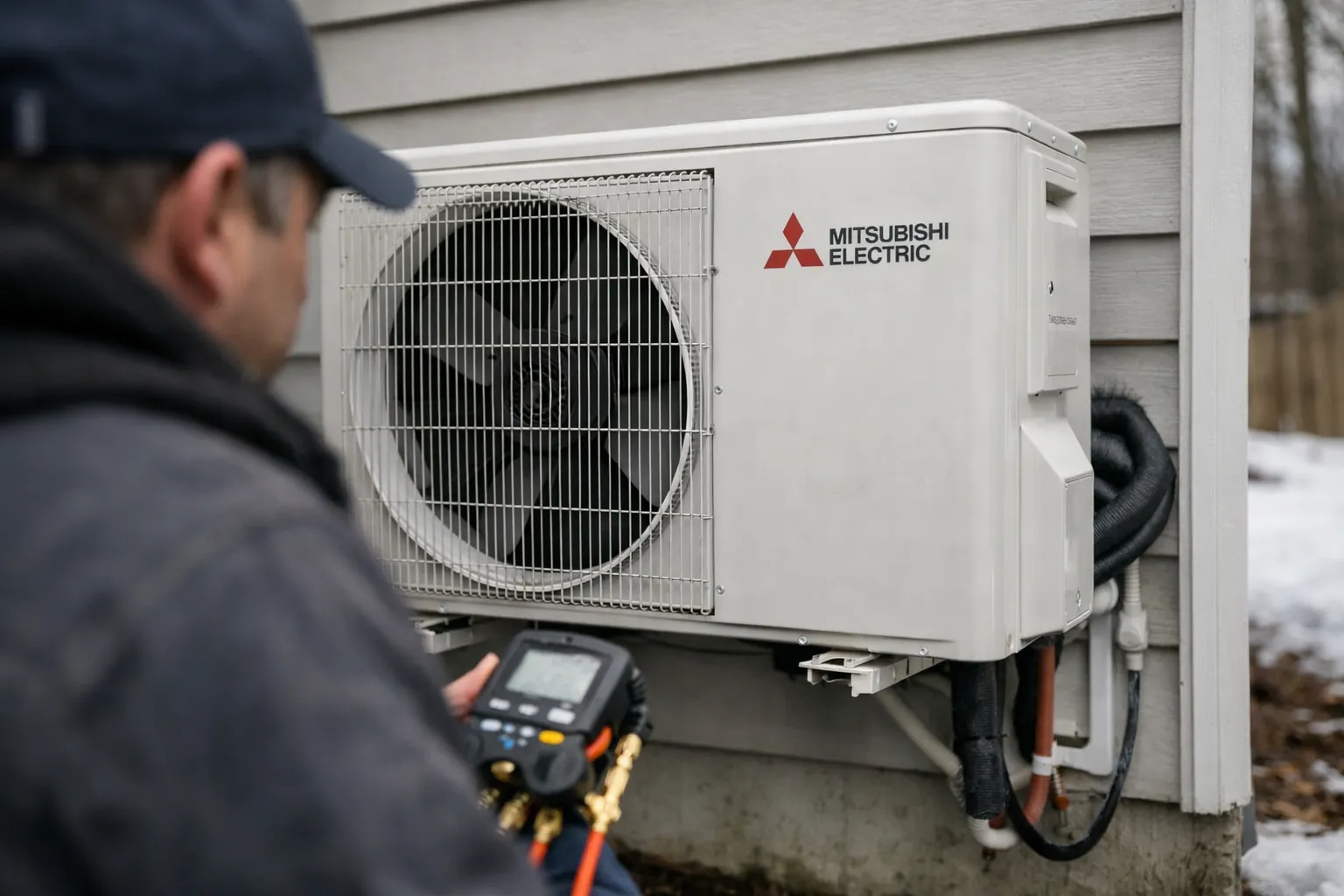
Overview — What this review covers
This updated September 2026 field assessment revisits Mitsubishi Electric’s Hyper‑Heat (H2i) mini‑split family with fresh context: product and software developments since 2024, market and incentive changes that matter to buyers, updated commissioning best practices from installers, and pragmatic guidance on when Hyper‑Heat remains the right choice.
- Hardware and controls — indoor heads, outdoor compressors, connectivity and firmware
- Installation, commissioning and 2026 serviceability observations
- Cold‑climate performance with current best practices
- Price ranges, incentives, and value in 2026
- Alternatives and a clear verdict
Background — Who makes this and who it's for
Mitsubishi Electric (global HVAC brand with a strong U.S. dealer network) positions Hyper‑Heat as its cold‑climate mini‑split line. Target customers are retrofit homeowners in heating‑dominant climates, mixed residential/multi‑family projects that need multiple indoor head types, and tech‑minded homeowners who want fine control and remote monitoring. Since 2024 Mitsubishi has continued to invest in diagnostics, installer tools, and dealer education—factors installers cite as important to consistent outcomes.
Features analysis — hardware, controls, service
Core Hyper‑Heat attributes remain: inverter-driven compressors with broad modulation, multiple indoor form factors (wall, cassette, ducted), active defrost strategies and cloud/remote monitoring. Notable 2024–2026 trends installers now factor into real projects:
- Software and diagnostics: Dealers report expanded firmware-based diagnostic logging and over-the-air updates that help resolve field behaviors (defrost timing, low‑ambient control) without immediate parts swaps. Confirm your installer applies current firmware during commissioning.
- Connectivity and cybersecurity: Remote monitoring via Mitsubishi’s cloud platform (MELCloud/dealer portal) is standard; expect two‑factor access and refreshed credential practices in dealer portals. If you integrate with home energy management or utility demand‑response, validate supported protocols and gateway hardware up front.
- Refrigerant and service ecosystem: The industry trend toward lower‑GWP refrigerants continues. Confirm which refrigerant the model uses and whether your region’s service infrastructure supports it. Spare‑parts availability has improved overall since pandemic-era disruptions, but high‑demand seasons still see extended lead times for large compressors and specific PCB assemblies.
Serviceability and technician workflows
Field reports from certified installers show that indoor unit service access remains good; outdoor units provide reasonable wire and component access. Two commissioning tasks demand attention in 2026:
- Apply the latest control firmware and re‑verify defrost parameters against manufacturer guidance—many field comfort issues are resolved at the firmware/parameter level.
- Use manufacturer capacity curves in your load model and perform cold‑weather verification tests (see commissioning best practices below).
Installation realities — updated best practices
From October 2024 through 2026, installers refined several consistent recommendations for reliable Hyper‑Heat performance:
- Design to the 99% design temperature: Size using an accepted heating‑load methodology and validate heat pump capacity at your local 99% design temp with the manufacturer’s published cold‑temperature capacity curves.
- Line‑set and oil return: Long multi‑zone runs still require careful planning—adhere to Mitsubishi maximums for length and elevation and include intermediate oil traps or suction‑line heaters where specified.
- Commissioning time: Expect an extra 1–4 hours on multi‑zone jobs for firmware updates, parameter tuning, and live defrost verification—budget this into quotes and contractor scheduling.
- Grid‑integration checks: If you plan demand‑response or time‑of‑use optimization, verify compatibility (OpenADR or proprietary utility gateways) during spec and prior to purchase.
Performance & cold‑climate behavior — practical 2026 perspective
Hyper‑Heat is still engineered to retain significant capacity at low ambient temperatures. The practical points to know in 2026:
- Homes in true cold‑climate zones increasingly rely on heat pumps for primary heat; successful Hyper‑Heat installs hinge on conservative sizing, proper commissioning and attention to distribution (airflow and thermostat placement).
- Defrost remains the main perceived nuisance; however, improved control logic and firmware updates released over 2024–2026 have reduced unnecessary defrosts on many installs when properly configured.
- Auxiliary resistance heat is still a useful safety net for extreme, short‑duration events, but many well‑sized Hyper‑Heat systems now run without frequent electric strip heat in winter-typical conditions.
Pricing & value — current ranges and incentives
Actual prices vary by model, zone count, installer labor rates and region. Current 2026 installed price ranges observed across multiple U.S. markets:
- Single‑zone Hyper‑Heat (wall head): $3,000–$7,000 installed
- Multi‑zone (2–4 heads): $8,000–$18,000 installed
- Large multi‑zone / light‑commercial: $18,000–$35,000+ depending on head count and ducted indoor units
Value considerations in 2026:
- Federal and state incentives that emerged from the last several years (tax credits, point‑of‑sale rebates, utility programs) can materially reduce net cost—check current listings at the Database of State Incentives for Renewables & Efficiency (DSIRE) and your utility.
- Factor in lifecycle savings from avoided fossil‑fuel heating, local electricity rates, and any time‑of‑use or demand‑response revenues if you enable grid‑interactive operation.
- Get three written bids and require that proposals include model numbers, published low‑temperature capacity curves, firmware version and a commissioning checklist.
Pros and cons — updated quick look
- Pros: Proven cold‑climate track record, broad indoor head selection, improved firmware/diagnostics through 2026, strong dealer training resources.
- Cons: Higher upfront cost versus basic heat pumps, requires experienced commissioning to realize promise, long refrigerant runs still constrain layout, parts lead times can spike seasonally.
Who it's for
- Cold‑climate retrofits where homeowners want to minimize fossil‑fuel heating and retain consistent heating to low outdoor temps.
- Multi‑zone residential or small commercial projects requiring varied indoor head types and precise comfort zoning.
- Owners who will pay for professional commissioning and insist on firmware/version transparency.
Alternatives
Compare Hyper‑Heat to these cold‑climate competitors before deciding:
- Fujitsu Halcyon H2i (Halcyon): Strong cold‑climate models and a wide indoor head selection; competitive pricing on some package configurations.
- Daikin Aurora: Daikin’s cold‑climate line—broad dealer network and options for integration with Daikin controls and commercial gateways.
- Gree / other OEM cold‑climate offerings: Lower‑cost options exist but verify published low‑temperature capacity curves, warranty and local service support.
Verdict — who should buy and next steps
As of September 2026, Mitsubishi Electric’s Hyper‑Heat remains a top-tier choice for cold‑climate ductless projects when the buyer values consistent low‑ambient capacity, a wide indoor head ecosystem and strong dealer support. The difference between success and disappointment now depends less on raw capability and more on procurement and commissioning discipline: secure an experienced installer, insist on current firmware and published capacity curves, confirm refrigerant type and parts support, and check available incentives to improve payback.
Practical next steps:
- Request model‑specific published capacity curves at −5°F, 14°F and 47°F from the manufacturer.
- Require installers to list firmware version and to perform a documented cold‑weather commissioning verification (defrost behavior, heat output validation).
- Confirm refrigerant type, warranty terms and expected parts lead times in writing.
- Check federal, state and utility incentives via DSIRE and your utility to understand net cost.
Should I size Hyper‑Heat to eliminate all electric backup?
Not necessarily. Size systems using an accepted heating‑load method to the local 99% design temp and review the published capacity curve. Many installs can minimize backup heat, but complete removal of auxiliary resistance should only follow validated capacity and distribution checks.
How important are firmware updates?
Very. Recent firmware releases (2024–2026) addressed defrost logic, reporting and diagnostics. Ask your installer to update and document firmware during commissioning and re‑check system behavior after a few cold nights.
Are there financial incentives that make Hyper‑Heat more affordable in 2026?
Yes—federal, state and utility incentives available in many jurisdictions can materially lower net cost. Incentive programs change frequently—verify current programs at DSIRE and with your utility before purchase.