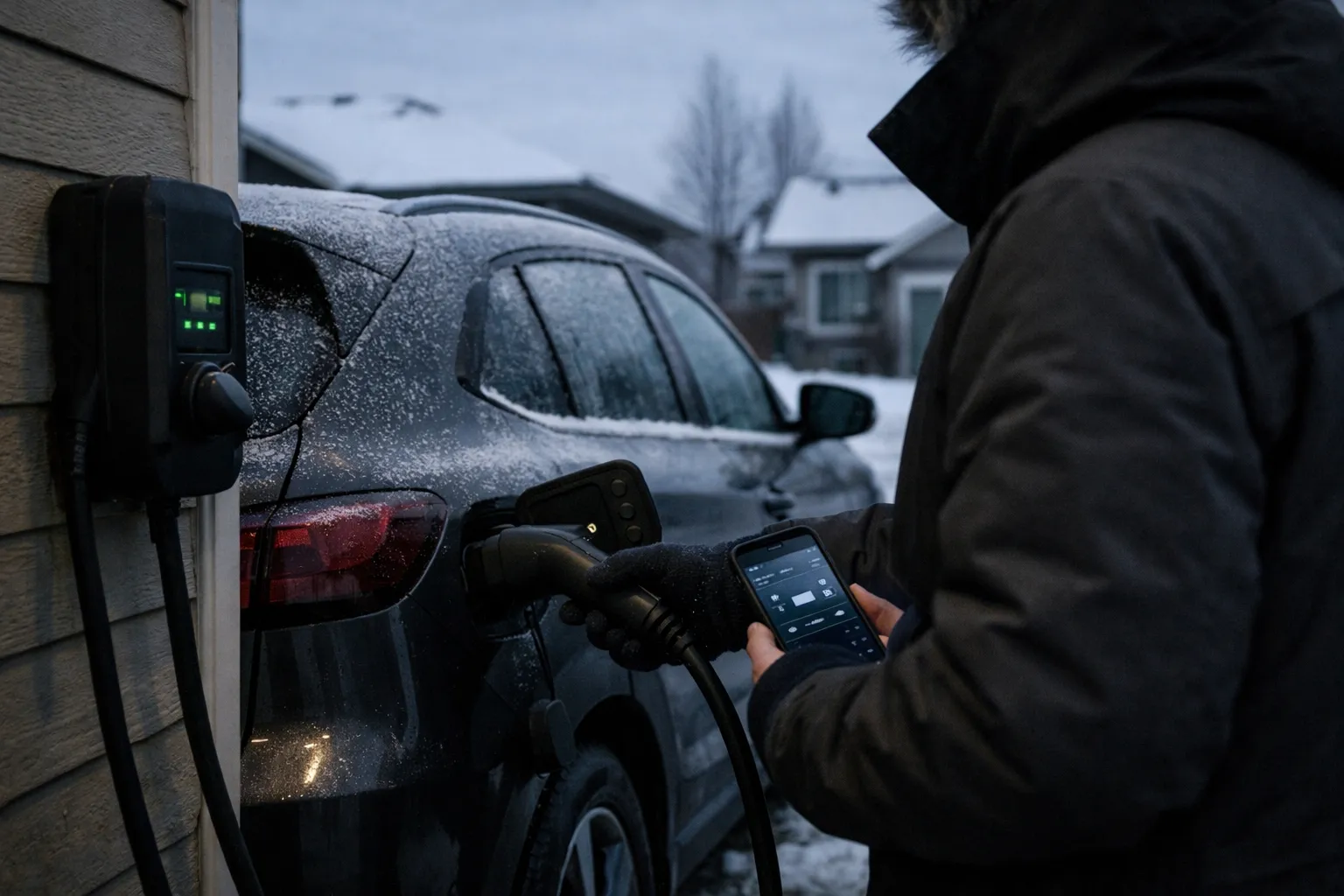
The number of electric vehicles (EVs) on the road has climbed sharply through 2024–2026, and many buyers in cold-weather regions are ready to switch. Cold ambient temperatures change an EV’s real-world range and charging behavior, but they do not make EV ownership unworkable. This guide walks you through a step-by-step buying process tailored to cold climates, with actionable checks, real-world calculations and negotiation points you can use at the dealer or when shopping private-party.
Step 1 — Define your winter use case and acceptable range
Start by mapping the trips you actually drive in winter conditions. Distinguish between daily commutes, occasional long trips, and cold-weather edge cases (power outages, storms, long highway runs in subzero). For each, note:
- One-way and round-trip mileage.
- Whether you can plug in at work or only at home.
- Where you park overnight: garage, carport, or curb (exposed parking raises cold penalties).
Estimate an acceptable “usable winter range” for each trip. A practical approach: take the manufacturer EPA range and apply a winter penalty of 10–40% depending on severity of your winters and how much highway driving you do. For most cold-climate buyers that means planning on 15–30% less range in steady subfreezing use.
Example: a vehicle with EPA 300 miles would be expected to deliver roughly 210–270 miles in sustained winter conditions; if your daily round trip is 60 miles and you can charge at home overnight, a 210-mile winter range is sufficient for three nights between charges.
Step 2 — Prioritize technical features that matter in cold weather
When comparing models, don’t focus solely on headline EPA range. Key systems influence winter performance:
- Battery thermal management: Liquid-cooled/heated packs with active thermal management preheat and hold battery temperature for better charging and reduced range loss. Verify whether the model has active thermal controls or passive air-cooling.
- Heat pump HVAC: Heat pumps are substantially more efficient than resistive cabin heaters and preserve range on cold days. Not all 2026 EVs have them—make sure a candidate includes one if you expect a lot of subzero driving.
- Preconditioning via app/schedule: The ability to preheat cabin and battery while plugged in is an easy win. Confirm app controls and whether scheduled preconditioning works with local time-of-use rates.
- High-voltage battery chemistry and warranty: Different chemistries (NMC, NCA, LFP, others) age differently and respond to cold differently. Don’t rely on chemistry jargon alone—verify manufacturer battery capacity warranty details (years and mileage) and any specific cold-weather exclusions.
- Charging connector and adapter ecosystem: In North America in 2026, many networks and models use either CCS or NACS (Tesla’s connector). Confirm the vehicle’s native inlet and local public charger support or adapter availability in your region.
- Cold-weather options: Heated steering wheels, heated seats, heated washer nozzles, and battery warmers can meaningfully reduce reliance on resistive heating.
How to verify these features during shopping
- Ask the dealer for printed or digital spec sheets for the exact trim you’re evaluating—thermal management and heat-pump fitment are often trim-dependent.
- Use the manufacturer’s build configurator online to confirm that the model year and trim include heat pump and active battery thermal management.
- Demonstrate preconditioning in the lot: ask the salesperson to show the app preheat/defrost function and confirm it works while plugged in.
Step 3 — Calculate winter charging needs and home setup
Cold weather increases energy consumption and slows DC fast charging rates until the battery warms. Plan your charging to keep the battery warm and available:
- Install a 240 V Level-2 (AC) charger at home with outdoor/weatherproof rating if you park outside. A plug-in NEMA 14-50 is OK short term, but a hardwired dedicated EVSE with a 40–48 amp circuit charges faster and is more convenient.
- Use the car’s preconditioning schedule to warm the battery just before departure while still plugged in. This reduces range loss and makes DC fast charging faster if you need it mid-trip.
- If you routinely take long winter trips, map fast chargers along your route and confirm whether they support your inlet standard and are rated and sheltered for winter use.
To size home charging and estimate winter energy cost, start with the vehicle’s EPA kWh/100 mi (or 3–4 mi/kWh). For a quick winter allowance, increase expected kWh/100 mi by 20–30% for cold climates. Example: a car that consumes 30 kWh/100 mi in temperate weather might need 36–39 kWh/100 mi in winter; for a 60-mile daily round trip that’s 22–24 kWh per day.
Step 4 — Inspect and test-drive for winter performance
Bring a checklist to the dealer or seller and do real-world verification:
- Test cabin preconditioning while plugged in and confirm battery preheat if available.
- Drive at expected winter speeds: highway at your typical winter speed, including use of HVAC set to your normal comfort level (e.g., 72°F/22°C). Note the instant energy consumption readout or kWh/100 mi figure if available.
- Check charging speed on a public DC fast charger if possible (many dealers allow a quick public charge). Observe whether the car accepts high power immediately or ramps up slowly — a slow start in very cold conditions can indicate limited battery preheating.
- Confirm physical hardware: heated mirrors, heated washer fluid accessibility, snow-shedding wipers and easy-access charging port locations when wearing gloves.
Step 5 — Ask targeted warranty and maintenance questions
Cold climates can make battery issues more visible. Before you buy, confirm:
- Battery capacity warranty length (common baseline: around 8 years or ~100,000 miles—verify exact terms and mileage) and what “failure” or capacity loss thresholds are covered.
- Whether battery-related cold-weather behavior (e.g., reduced charging speed) is covered under any diagnostic warranty or if the dealer can run a manufacturer battery health report at purchase.
- Service network proximity and whether the OEM provides mobile service or dealer loaner vehicles in winter months—time off the road is more disruptive in winter.
Step 6 — Winter equipment, tires and negotiation points
Winter-related equipment is negotiable and can be a real benefit at purchase:
- Winter tire package and installation: budget for a set of winter tires (and rims) or negotiate a dealer-installed winter set as part of the deal. Winter tires improve safety and effective range by reducing slip losses.
- Heated accessories and freezing-point washer fluid: include as extras if offered, especially for used-car purchases.
- Roadside assistance and towing policy in subzero conditions: confirm whether dealer- or OEM-provided towing covers battery-out scenarios and whether there are towing limits for EVs.
Step 7 — Used EV specific checks (if buying used)
If you’re considering a used EV, add these winter-specific checks:
- Request a recent battery capacity or state-of-health report from the seller or dealer; if none exists, ask the seller to have the manufacturer or an independent EV service run the diagnostic.
- Ask about past cold-weather events: did the car sit for prolonged periods in subfreezing temperatures without charging? Prolonged storage at very low SOC in extreme cold can accelerate issues.
- Confirm software updates are current—the latest BMS (battery management system) and thermal control firmware can improve cold-weather behavior.
Step 8 — Ownership planning: charging tariff, parking and emergency prep
A few operational decisions will make winter ownership far easier:
- Enroll in a time-of-use electricity tariff that aligns with your charging and preconditioning schedule to keep running costs reasonable.
- If you park outside, consider a weatherproof enclosure or simple windshield coverage to reduce scraping and battery heat loss. A garage is one of the most effective winter-range protectors.
- Create a winter emergency kit that includes a portable Level-2 charger if you travel to areas with uncertain public charging in winter, plus basic cold-weather supplies and gloves suitable for handling charging connectors.
Final checklist before signing
- Have you validated the vehicle’s battery and thermal-management features in writing for the specific VIN/trim?
- Does the car’s winter usable range meet your defined use-case with the planned charging options?
- Are preconditioning and app-scheduled charging demonstrated and functional?
- Does the warranty cover the battery for a duration and mileage you find acceptable?
- Did you secure winter tires, or negotiate them into the price?
Bottom line
Buying an EV for cold climates in 2026 is about matching technology to use-case and planning for winter’s predictable penalties. Focus on active battery thermal management, heat-pump HVAC, preconditioning capability and a realistic winter range estimate. Combine that with a properly sized home charging system, a winter tire plan and targeted warranty checks, and an EV can be a practical, even superior, daily driver through the coldest months.
Use the step-by-step checklist in this guide to evaluate candidates at the dealer, and don’t hesitate to walk away if a vehicle can’t demonstrate the thermal systems and app features you need for winter confidence.