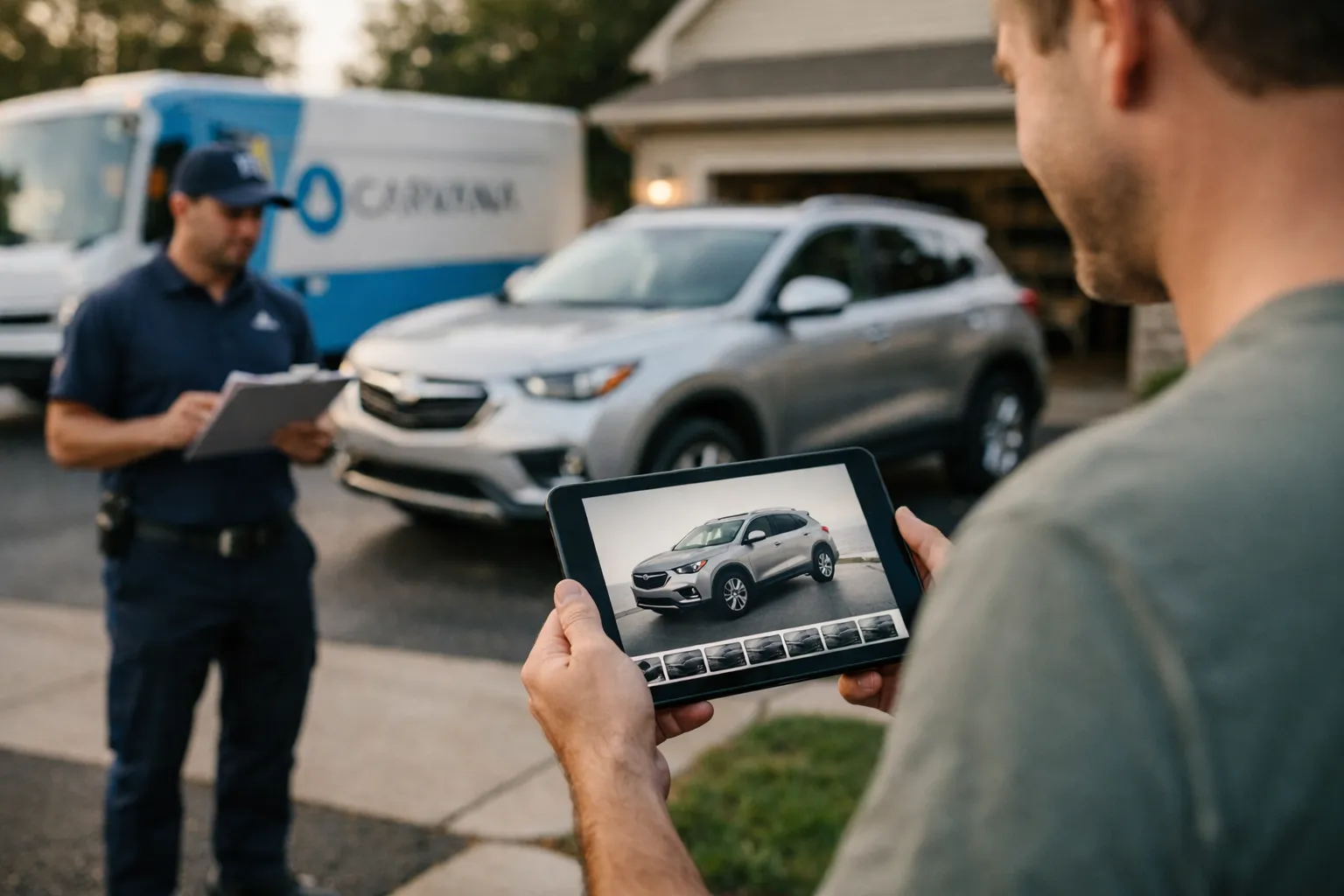
Carvana remains one of the most visible online used-car retailers in 2026. For car-buying enthusiasts who follow the retail disruption of the past decade, Carvana’s model — browse rich listings, buy online, and accept home delivery — is now mainstream. This review evaluates Carvana’s end-to-end experience in 2026: inventory quality, inspection and reconditioning, the buying and financing flow, delivery and returns, post-purchase service, pricing transparency, and who should (and shouldn’t) use it.
What this review covers
We focus on features that matter to buyers: accuracy of listings and photos, inspection/reconditioning claims, logistics of delivery and pick-up, the return policy and warranty options, financing and trade-in mechanics, real-world customer-service responsiveness, and value compared with local dealers and other online retailers.
Inventory, photos, and listing accuracy
Carvana’s searchable inventory continues to be wide, spanning common compact cars through luxury SUVs and electric vehicles. Listings are richly photographed with 360° exterior and multiple interior shots, and the platform’s filters are robust for trim, options, battery/range for EVs, and certified-equivalent labels.
Strengths:
- High-resolution galleries and detailed option listings help buyers spot equipment and cosmetic issues before purchase.
- Good supply of late-model used EVs and hybrids in many markets—useful as buyers shop for range, charger compatibility, and incentives.
Limitations:
- Photos and descriptions are only as good as the listing — minor damage, aftermarket modifications, or service history nuances occasionally appear after closer inspection.
- Availability varies by region. In less populous areas, inventory can shrink and delivery times increase.
Inspection and reconditioning: what you can expect
Carvana advertises a centralized inspection and reconditioning workflow before cars are listed. Buyers should understand that “certified” in Carvana’s context is different from OEM certified-pre-owned (CPO) programs: it is an in-house standard rather than a manufacturer-backed CPO.
- Reconditioning typically addresses mechanical defects and cosmetic flaws that could affect resaleability; Carvana lists completed work on many vehicles.
- Buyers should still look for documentation of recent maintenance and request specifics on replaced parts where possible.
Buying, financing, and trade-ins
The entirely online purchase flow is a top selling point. You can lock a vehicle, complete paperwork, and select financing or pay cash without visiting a dealer. Carvana partners with multiple lenders and offers its own financing rates in many markets.
Key buyer considerations:
- Prequalification tools exist, but always compare offers from banks, credit unions, and manufacturer captive finance arms—rates and terms can vary significantly.
- Carvana’s online trade-in offer is instant and convenient; however, shoppers should get competing trade-in quotes (dealer, CarMax, local independents) to ensure they’re not leaving value on the table.
Delivery, pick-up, and the 7-day return window
Carvana’s hallmark: home delivery. The company arranges a scheduled drop-off (or pick-up at a vending machine where available). The delivery experience is generally smooth in urban/suburban markets with established logistics. In some regions, buyers report longer-than-promised windows or rescheduling during peak periods.
Carvana’s return policy gives buyers a short trial period to confirm the car meets expectations. Use that time strategically:
- Drive in varied conditions—highway, city, and rough-road scenarios.
- Check for hidden damage, paint overspray, or misaligned panels and operate all electronics, ADAS features, and HVAC settings.
- Confirm the title and any service records match the listing.
Post-purchase support, warranties, and extended plans
Carvana provides a limited warranty and offers extended protection plans at purchase. These plans cover a range of components and deductibles; the coverage level and exclusions should be read carefully.
Practical points:
- Extended plans can be useful for high-mileage or older vehicles, but they are frequently more expensive than comparable third-party options—compare cost and coverage before buying.
- Resolve warranty claims promptly and keep detailed records; response times can vary by region and season.
Customer service and real-world issues
Public reviews show a mix of experiences. Many buyers praise the convenience and transparency of listings and delivery; others report friction with paperwork, post-sale issue resolution, and timing for claims or repairs. This variation is typical for a nationwide online seller that outsources parts of logistics and service.
Price competitiveness and total cost
Carvana’s pricing is often competitive on sticker price, particularly when inventory is abundant. Always compare the out-the-door cost (tax, registration, documentation fees, delivery or pickup charges) with local dealer offers. Use total cost over the first year — fuel/charging, insurance differences, and immediate maintenance needs — to judge overall value.
Who Carvana is best for
- Buyers who prioritize convenience and a no-haggle online transaction.
- Urban and suburban buyers with flexible delivery windows and the ability to inspect the car during the return window.
- Tech-savvy shoppers who will run independent checks (third-party inspection, vehicle history reports) and compare financing options.
Who should think twice
- Buyers who must drive a car immediately the same day—delivery in some areas can take days to weeks.
- People who rely on manufacturer CPO benefits (extended factory warranties, certified dealership service) for peace of mind.
- Shoppers uncomfortable managing remote paperwork or who want in-person negotiation and test drives before committing.
Practical buying checklist for Carvana shoppers
- Compare financing rates before accepting Carvana’s offer.
- Request and review recent maintenance records and reconditioning details.
- Use the full return/trial window—test the car in your typical driving conditions.
- Get an independent pre-purchase inspection if you have concerns about structural or mechanical integrity.
- Factor in delivery, registration, and any handling fees when comparing total cost.
Bottom line
Carvana in 2026 remains a strong option for buyers who want a streamlined online purchase and the convenience of home delivery. Its strengths are ease of use, strong photographic listings, and a broad searchable inventory. Limitations include variability in delivery timing, the difference between in-house inspection standards and manufacturer CPOs, and occasional customer-service friction. For the informed buyer who uses the return window, shops financing, and compares total costs, Carvana can be a time-saving and cost-competitive way to buy a used car.