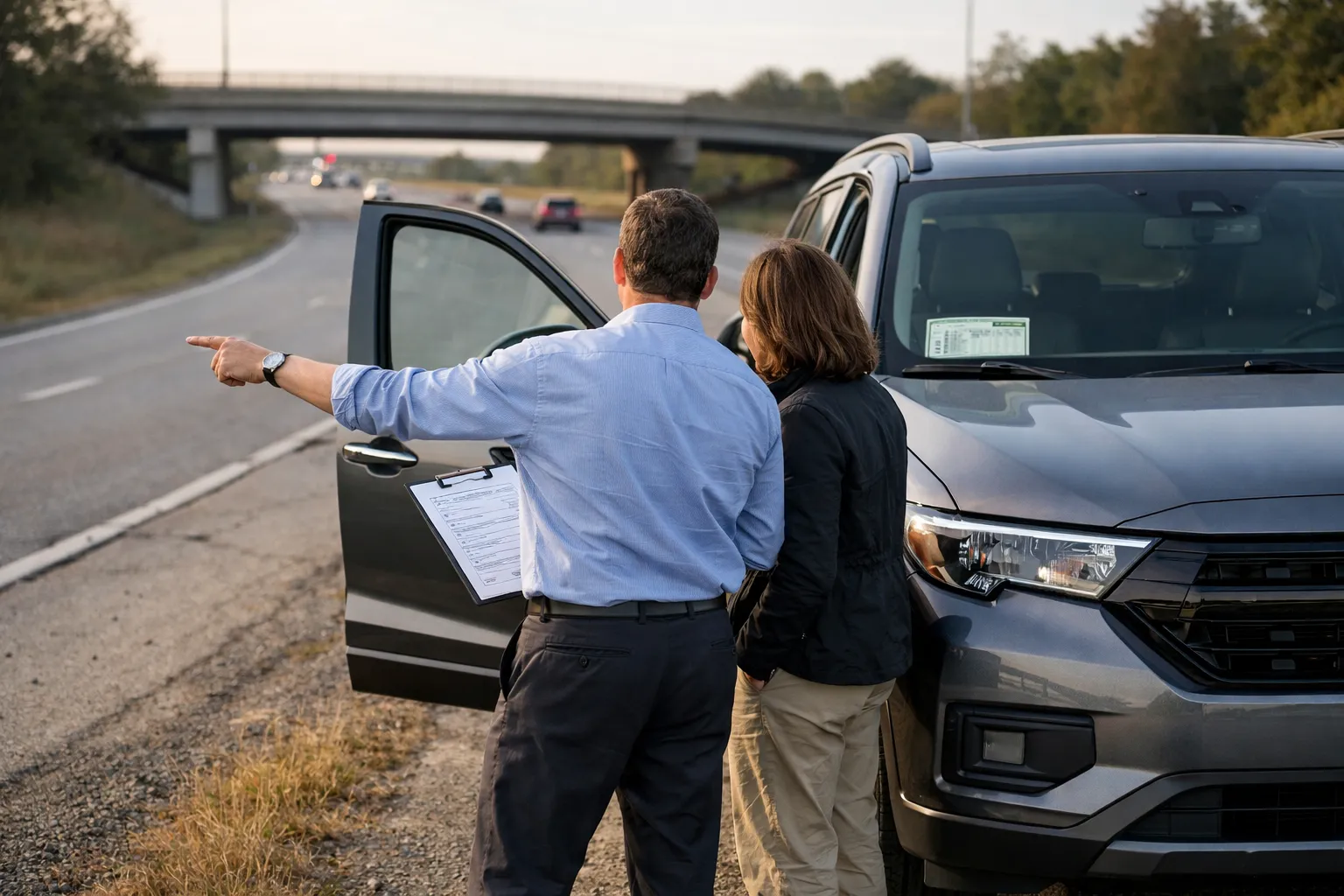
Advanced driver‑assist systems (ADAS) — lane centering, adaptive cruise, automatic emergency braking and hands‑free highway driving — are now mainstream across brands. But ADAS performance varies widely by hardware, software version and real‑world conditions. For car‑buying enthusiasts who want a vehicle where the driver aids actually reduce risk and add convenience, buying for reliable ADAS requires a disciplined, evidence‑based approach.
Who this guide is for and what you’ll learn
This guide is for buyers (new and used) who intend to rely on ADAS daily and want to evaluate a vehicle’s systems before purchase. You’ll get a step‑by‑step process to:
- research system architecture and real‑world reliability;
- identify the right trims and options;
- conduct an evidence‑driven test drive and validation;
- inspect used vehicles for ADAS hardware and software issues;
- ask the right questions at the dealer and negotiate on value.
Step 1 — Understand ADAS basics and what matters
All ADAS are not created equal. Start by separating features into three practical buckets:
- Active safety aids: automatic emergency braking (AEB), pedestrian/ cyclist detection, blind‑spot alerts — these reduce crash risk in city and suburban driving.
- Driver aids: adaptive cruise control (ACC), lane‑centering, lane‑keep assist — these reduce workload on highways but need correct driver engagement.
- Hands‑free/Level‑2+ systems: manufacturer‑branded hands‑free features (e.g., GM Super Cruise, Ford BlueCruise) offering sustained hands‑off driving on mapped highways; typically require driver monitoring and geofenced roads.
What matters most to you determines priority: collision avoidance in town (AEB quality) versus relaxed long‑distance commuting (lane‑centering and hands‑free comfort).
Step 2 — Research confidently (2–4 hours)
Before visiting a dealer or testing a used car, gather evidence from independent sources:
- IIHS and Euro NCAP ratings: review specific crash‑avoidance and lane‑keeping test results for the exact model year and trim.
- Consumer Reports: look for ADAS reliability and real‑world braking/steering evaluations.
- Owner forums and owner‑reported issues: search for recurring camera, radar or windshield sensor faults for the model year.
- Manufacturer documentation: read the owner manual or online brochure to confirm included sensors (camera, radar, lidar) and driver‑monitoring method (camera‑based or torque sensor).
- Recall and service bulletin databases: check NHTSA and manufacturer recall pages for sensor‑oriented recalls or software updates affecting ADAS.
Concrete example: If you’re considering a 2024–2026 model with a brand‑name hands‑free system, note whether the system requires a subscription for map updates or remote diagnostics — this affects long‑term function.
Step 3 — Narrow trims and packages
ADAS often comes bundled: only certain trims include the full suite, or some features are optional. Build a short list that specifies:
- exact model year, trim and option code;
- whether the ADAS package includes driver monitoring camera, windshield‑mounted camera housing, and radar;
- whether the feature is software‑activated in‑car (can be enabled later) or requires hardware.
Tip: Ask the dealer for documentation showing the vehicle’s ADAS option codes and basic wiring/hardware list. For used cars, request the original window sticker (Monroney) or dealer invoice when possible.
Step 4 — Prepare a practical test‑drive plan (bring these items)
- Printed checklist (see the Test Drive Checklist below).
- Passenger to watch for lane departures and following distance behavior.
- Smartphone with camera to record short clips (ask dealer consent).
- Familiar highway route with on‑ramps, merges and at least 10–15 minutes of steady speed driving.
Test Drive Checklist (what to test and how to score)
- Activation and notifications: Does the system activate easily? Are prompts clear? Score 0–3.
- Adaptive Cruise Logic: Smooth acceleration/deceleration, predictable following distance, response to cut‑ins. Score 0–4.
- Lane‑centering: Holds position through straight and mildly curved lanes without oscillation, avoids overcorrection. Score 0–4.
- Lane change assist: Performs hands‑off or assisted lane changes smoothly and safely; check blind‑spot behavior. Score 0–3.
- AEB and avoidance: Test low‑speed automatic braking in controlled, safe situations (e.g., parked car in lane under guidance, with dealer permission). Score 0–3.
- Driver monitoring: Observe how the system enforces attention (face camera alerts, steering torque checks). Score 0–2.
- Behavior in common conditions: Test through a shaded tree tunnel, light rain, and highway glare if safe and available; note any disengagements. Score 0–4.
Score interpretation: 14–20 implies strong, predictable performance for normal drivers; 8–13 suggests capability with limitations; under 8 indicates systems that may disappoint daily ADAS users.
Step 5 — What to watch for during the test drive (red flags)
- Frequent false disengagements on minor road irregularities.
- Large, abrupt braking or lane corrections that startle the driver.
- Driver‑monitoring that requires uncomfortable postures or is easily fooled.
- Inconsistent behavior across similar situations — e.g., works on one highway segment but fails on an adjacent one.
- Dealer reluctance to demonstrate advanced features or to let you test on mapped highways for hands‑free systems.
Step 6 — Used cars: specific inspections and questions
Buying a used vehicle with ADAS adds complexity. Focus on hardware integrity and update history:
- Windshield and camera housing: inspect for microchipping or signs of replacement that may misalign cameras or LIDAR. Ask whether the windshield was replaced and whether recalibration was performed.
- Sensor alignment and mounts: look for aftermarket repairs or paint around radar housings (front bumper), which may indicate collision repairs.
- Service records for ADAS calibration or software updates: request maintenance logs that list calibrations after windshield or bumper work.
- OBD‑II codes and ADAS fault history: have an independent shop or ADAS‑capable technician scan for active or historic ADAS faults before purchase.
When negotiating, treat missing calibration records or a replaced windshield as leverage — recalibration can cost several hundred dollars and, if improperly calibrated, degrades system safety.
Step 7 — Software, updates and ownership costs
ADAS is software‑dependent. Key ownership questions:
- Does the manufacturer provide over‑the‑air (OTA) updates? If so, are updates free for the lifetime of ownership?
- Does the vehicle require subscriptions for maps or connected services that enable hands‑free or predictive features? Ask for current pricing and transferability to a new owner.
- What is the warranty coverage for ADAS components (camera, radar modules)? Is there extended warranty available that covers sensors and calibration?
Note: Some hands‑free features rely on cloud services and map licensing; confirm whether service transfers with resale or requires a buyer subscription.
Step 8 — Insurance and legal considerations
Check with your insurer about discounts or rate impacts for specific ADAS packages. Insurers increasingly use ADAS data in claims — policies vary on whether they require vehicle telematics or accept ADAS features as premium‑reducing factors.
Also be aware of local regulations: some jurisdictions require driver monitoring or impose limits on hands‑free claims. Confirm what features are permissible in your region and how the manufacturer states system limitations in the owner’s manual.
Step 9 — Negotiation and purchase checklist
When you’re ready to buy, use this checklist to secure value and protect yourself:
- Get the VIN and confirm the exact ADAS package and software build with the dealer in writing.
- For new cars: ask for a written statement about the update policy, any subscription rates and whether a trial period is included.
- For used cars: require a pre‑purchase independent ADAS diagnostics check; add a contingency for recalibration if windshield or sensors show replacement history.
- Negotiate price for optional ADAS packages — dealers often mark them up; compare dealer markup to manufacturer MSRP for the package.
- Ask for a short demonstration drive after purchase to verify systems still operate as before handover.
Final decision flow: a quick rule set
- If daily highway commuting is the priority, prioritize vehicles with tested hands‑free systems that score well for sustained lane‑centering and dependable driver monitoring.
- If city collision avoidance is primary, prioritize strong AEB/pedestrian ratings from IIHS/Euro NCAP and reliable sensor redundancy (camera + radar).
- Avoid vehicles with frequent, documented ADAS reliability complaints unless the price reflects the cost of anticipated repairs and recalibration.
- For used purchases, insist on documented calibrations after any windshield or bumper work — otherwise walk away or discount the price accordingly.
Resources and where to verify claims
- IIHS.org: crash‑avoidance & ADAS test reports by model year.
- ConsumerReports.org: ADAS reliability and road‑test analysis.
- NHTSA.gov: recall and defect investigation database for vehicles and ADAS components.
- Manufacturer owner manuals and technical service bulletins: available on maker websites or via dealer request.
Parting advice
Buying for reliable ADAS is about evidence more than brand hype. Focus on documented performance, clear hardware configurations (camera types, radar presence, driver‑monitoring method), and practical testing across the driving conditions you face daily. Don’t let name recognition alone guide you — test‐drive, inspect, and insist on written clarity about updates and subscriptions. With a disciplined approach, ADAS can deliver real safety and convenience; done carelessly, it becomes an expensive and frustrating feature.